How Bakery Enzymes Improve Bread Quality, Processing Performance, and Shelf Life

Discover how bakery enzymes help improve dough handling, loaf volume, crumb structure, freshness, and production consistency in modern bread manufacturing.

BAKERY
6/23/2026

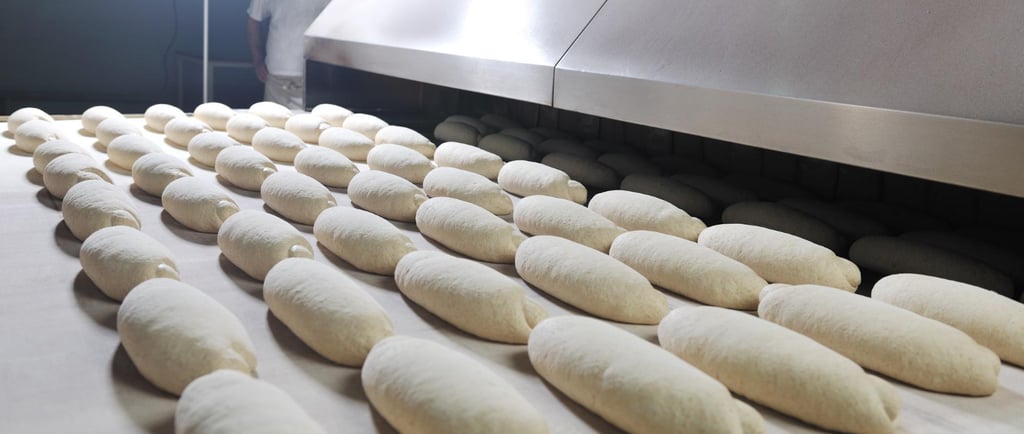
Industrial bakery production line with dough processing and bread manufacturing

How Bakery Enzymes Improve Bread Quality, Processing Performance, and Shelf Life

The modern baking industry faces increasing pressure to deliver consistent product quality while improving production efficiency, extending shelf life, and meeting growing consumer demand for cleaner ingredient labels. At the same time, bakers must work with increasingly variable raw materials, complex production schedules, frozen dough systems, and high-speed manufacturing environments.

To address these challenges, enzymes have become one of the most important tools in industrial baking. Today, bakery enzymes are widely used to improve dough handling, strengthen or modify gluten functionality, enhance loaf volume, optimize crumb structure, extend freshness, and support consistent production performance across a wide range of bakery applications.

Unlike traditional chemical additives, enzymes work during processing and baking to improve specific characteristics of dough and finished products. By carefully selecting the right enzyme combination, bakeries can improve product quality while maintaining efficient and reliable production processes.

Why Enzymes Have Become Essential in Modern Baking

Bread production is influenced by many factors, including flour quality, wheat variety, milling conditions, dough formulation, fermentation parameters, and baking conditions. Even small variations in raw materials can lead to noticeable differences in dough performance and finished product quality.

Modern bakeries require solutions that help reduce this variability while maintaining consistent production results. Enzymes provide a targeted and efficient approach because each enzyme performs a specific function within the dough system.

Today, enzyme technology is commonly used in the following:

  • Pan bread production

  • Toast bread manufacturing

  • Buns and rolls

  • Artisan bakery products

  • Flatbreads and tortillas

  • Frozen dough systems

  • Par-baked products

  • Bakery premixes

  • Flour treatment programs

The result is improved process stability, reduced production variability, and more predictable baking performance.

Improving Dough Handling and Processing Performance

One of the most important benefits of bakery enzymes is their ability to improve dough handling characteristics.

Industrial bakeries depend on dough systems that can withstand mixing, dividing, moulding, proofing, and baking while maintaining consistent functionality. Poor dough handling can result in production delays, increased waste, reduced throughput, and inconsistent product quality.

Different enzyme classes help optimize dough performance in different ways.

Xylanases and Hemicellulases

Xylanases and hemicellulases act on arabinoxylans and other non-starch polysaccharides naturally present in flour. By modifying these components, they help improve water distribution throughout the dough system.

Benefits may include:

  • Improved dough machinability

  • Better dough stability

  • Enhanced fermentation tolerance

  • Improved gas retention

  • Increased loaf volume

  • More consistent processing performance

These enzymes are widely used in industrial bread production and flour standardization programs.

Cellulases

Cellulases help improve dough tolerance and dough handling characteristics. They are particularly valuable when flour quality varies or when bakers require more consistent processing performance.

Potential benefits include:

  • Improved dough tolerance

  • Enhanced dough extensibility

  • Better dough machinability

  • Improved crumb structure

  • Increased loaf volume

Cellulases are often incorporated into flour treatment systems and bakery improvers designed to improve overall dough functionality.

Proteases

Proteases perform the opposite function of strengthening enzymes. Instead of increasing dough strength, they selectively modify gluten proteins to improve dough extensibility and reduce excessive elasticity.

This makes proteases particularly useful in:

  • Crackers

  • Biscuits

  • Cookies

  • Wafer applications

  • Specialty dough systems

By improving dough extensibility, proteases can help reduce processing difficulties and improve production efficiency.

Enhancing Dough Strength and Stability

For many bakery applications, strong and stable dough is essential.

Dough systems must maintain their structure throughout mixing, fermentation, proofing, and baking. Weak dough often leads to reduced volume, poor shape retention, inconsistent crumb structure, and lower production yields.

Glucose Oxidase

Glucose oxidase is one of the most widely used dough-strengthening enzymes in industrial baking.

The enzyme promotes the formation of additional cross-links within the dough system, resulting in stronger gluten functionality and improved dough stability.

Benefits commonly associated with glucose oxidase include:

  • Improved dough strength

  • Better dough tolerance

  • Enhanced fermentation stability

  • Improved loaf volume

  • Better shape retention

  • More consistent baking performance

Because of these advantages, glucose oxidase is frequently used as an alternative to traditional oxidizing agents in bread production.

Transglutaminase

Transglutaminase strengthens protein networks by creating additional links between proteins naturally present in dough.

This mechanism can help improve:

  • Dough stability

  • Dough structure

  • Flour performance consistency

  • Frozen dough functionality

  • Process reliability

Transglutaminase is particularly valuable in demanding bakery processes where maintaining dough integrity is critical.

Improving Bread Volume and Crumb Structure

Consumers often associate bread quality with volume, softness, and crumb appearance.

A well-developed crumb structure contributes to visual appeal, eating quality, and overall product acceptance. Enzymes play a major role in optimizing these characteristics.

Better Gas Retention

Many bakery enzymes contribute to improved gas retention during fermentation and baking.

Improved gas retention can result in:

  • Increased loaf volume

  • Improved crumb grain

  • More uniform cell structure

  • Better product appearance

Improved Water Management

Proper water distribution throughout the dough system is essential for achieving consistent crumb quality.

Enzymes that modify flour polysaccharides help improve water availability and dough functionality, supporting more uniform baking performance.

Consistent Crumb Quality

By improving dough development and fermentation performance, enzyme systems help create:

  • Finer crumb texture

  • More uniform crumb structure

  • Improved softness

  • Better overall eating quality

These improvements are especially important in industrial production where consistency is a key commercial requirement.

Extending Freshness and Shelf Life

Freshness remains one of the most important quality parameters in baked goods.

Consumers expect bread products to remain soft and enjoyable for longer periods, while manufacturers seek to reduce returns and minimize product waste.

Maltogenic Amylase

Maltogenic amylase is widely recognized as one of the most effective enzymes for improving bread freshness.

The enzyme acts on starch components involved in bread staling and helps slow the firming process that occurs during storage.

Benefits may include:

  • Improved softness

  • Reduced staling

  • Extended freshness

  • Better shelf-life performance

  • Improved consumer acceptance

For many bread manufacturers, maltogenic amylase has become a standard component of modern bakery improver systems.

Glucoamylase

Glucoamylase contributes to bakery performance by generating fermentable glucose from starch-derived dextrins.

This can support:

  • Improved crust color

  • Enhanced Maillard reactions

  • Better flavor development

  • Improved product appearance

  • Enhanced frozen dough performance

In many applications, glucoamylase works synergistically with other bakery enzymes to optimize overall product quality.

Optimizing Frozen Dough Performance

Frozen dough systems continue to grow in popularity because they provide flexibility, efficiency, and simplified distribution.

However, frozen dough presents unique technical challenges.

Common issues include:

  • Reduced loaf volume

  • Crust separation

  • Blistering

  • Moisture migration

  • Inconsistent baking performance

Specialized enzyme systems can help address these challenges.

Frozen Dough Enzyme Strategies

A combination of enzymes may be used to improve frozen dough functionality, including:

  • Glucose oxidase

  • Transglutaminase

  • Glucoamylase

  • Xylanase-based systems

These solutions help maintain dough strength, improve fermentation tolerance, and support consistent quality after thawing and baking.

Supporting Clean Label Formulations

Consumer demand for cleaner ingredient declarations continues to influence bakery product development.

Many manufacturers are seeking alternatives to traditional additives while maintaining product quality and production efficiency.

Enzymes can play an important role in clean label strategies because they perform highly specific technological functions during processing.

Common clean label objectives include:

  • Reducing dependence on traditional dough conditioners

  • Replacing certain chemical oxidants

  • Supporting emulsifier reduction strategies

  • Improving shelf life through enzyme technology

  • Enhancing dough performance naturally

Fermented flour solutions and carefully selected enzyme combinations are increasingly used to help manufacturers achieve these goals.

Choosing the Right Enzyme Solution

There is no single enzyme that can solve every bakery challenge.

The most effective bakery enzyme programs are designed around specific production objectives, including:

  • Dough strengthening

  • Dough extensibility

  • Volume improvement

  • Freshness extension

  • Frozen dough performance

  • Flour standardization

  • Clean label formulation

Successful implementation often requires evaluating flour characteristics, process conditions, product requirements, and desired performance outcomes.

For this reason, many industrial bakeries work with enzyme suppliers that provide both technical products and application support.

Conclusion

Bakery enzymes have become essential tools for improving bread quality, production efficiency, and product consistency.

From dough handling and flour treatment to loaf volume, freshness, frozen dough performance, and clean label development, enzyme technology allows bakeries to address multiple technical challenges while maintaining efficient manufacturing operations.

As bakery production continues to evolve, enzymes will remain one of the most effective and flexible technologies available for helping manufacturers produce high-quality baked goods that meet both operational and consumer expectations.